🌐 The Problem#
The organization runs microservices across multiple, isolated AWS accounts — a deliberate boundary for security and billing, but one that made simple things hard. A service in one account calling a service in another meant either exposing an endpoint to the public internet, or manually wiring up VPC peering and DNS for every new pair of services. Neither scales past a handful of services.
🚀 The Decision#
The easy path was public exposure: put an endpoint on the internet, lock it down with auth, call it a day. I ruled that out — cross-account traffic between internal services shouldn't touch the public internet at all, regardless of how well the auth is locked down. Private cross-account networking was the harder but correct call: AWS RAM to share private domain access between accounts, VPC endpoints so traffic never leaves AWS's private network, and Route 53 for DNS resolution that makes it look like one coherent service mesh instead of a pile of manually peered VPCs.
The trade-off was setup complexity — automated resource sharing and domain orchestration is more work upfront than "just expose it publicly." That investment is what turned into the 60% reduction in inter-service setup complexity: once the RAM sharing and DNS automation were in place, adding a new cross-account service connection stopped being a manual VPC-peering exercise.
🏗️ How It Was Built#
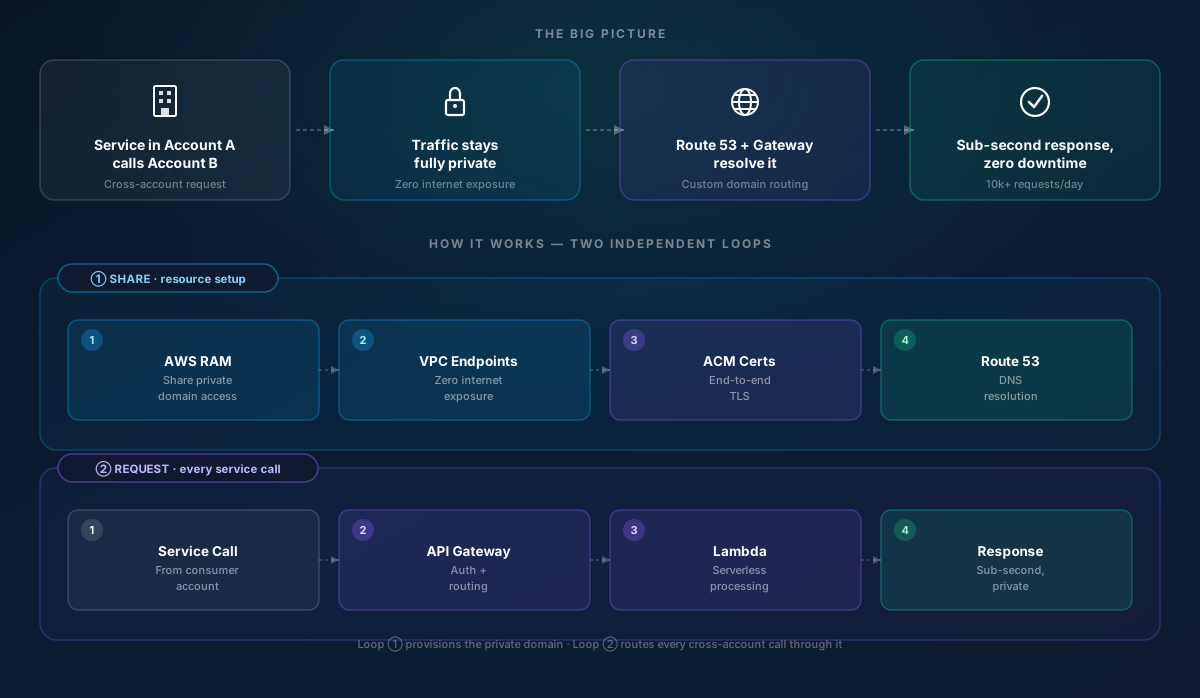
Four layers, two loops:
Share (setup). AWS RAM distributes private domain access across accounts. VPC endpoints keep every call inside AWS's private network — zero internet exposure. ACM certificates give every connection end-to-end TLS. Route 53 ties it together with DNS resolution that works the same way regardless of which account is calling which.
Request (runtime). Every service call goes through API Gateway for auth and routing, Lambda for serverless processing, and back — all inside the private network, sub-second, with zero manual per-service configuration once the sharing layer is set up.
📈 Impact & Results#
- 10,000+ requests/day across multiple AWS accounts with 99.99% availability and sub-second cross-account latency
- 60% less setup complexity for new cross-account service connections, via automated domain orchestration instead of manual VPC peering
- Zero internet exposure for internal service-to-service traffic — every call stays inside AWS's private network, encrypted end-to-end
Key Achievements
4 architectural layers, zero downtime
60% less setup complexity
10000+ daily requests across accounts
Enabled secure cross-account microservice connectivity across organizational boundaries through automated domain orchestration